If you have a slab leak in Quincy, the first question on your mind is probably what this is going to cost. Fair question. The honest answer is that it depends, and most of what it depends on is things you can actually see and think through before anyone starts digging. Here is what we look at when we walk a job, and why two leaks that look similar from the surface can end up very different on the bill.
Where the leak sits under the slab
The location of the leak matters more than almost anything else. A pinhole in a supply line running near the edge of a foundation is a different job than one sitting under the middle of a kitchen floor. The closer the break is to an exterior wall or a load-bearing section, the more care the work takes, and the more we have to think about the structure above it.
Quincy homes vary a lot on this. Many of the older houses near Wollaston and Quincy Center were built with copper lines run straight through concrete, sometimes with very little clearance. Newer construction in places like Germantown or along the Southeast Expressway corridor may have PEX routed differently. Same basic problem, different path, different amount of work to get to it.
How much concrete has to come up
Access is where costs climb fastest. A plumber who can get to a leak through a small, targeted opening is doing a very different job from one who needs to break out a large section of floor. Here are the main things that determine how much opening is needed:
- The size of the leak area and how far the water has spread under the slab
- Whether the line can be reached from a crawlspace, a basement, or a neighboring room
- The thickness of the slab and whether it is reinforced with wire mesh or rebar
- Flooring type, since tile, hardwood, and vinyl each need different removal and replacement
Concrete work is also messy and slow, and it needs a proper patch once the line is fixed. Ask any plumber who has done slab work how much of the job is actually the pipe, and you will usually hear it is the smaller part.
Which pipe is failing and what it is made of
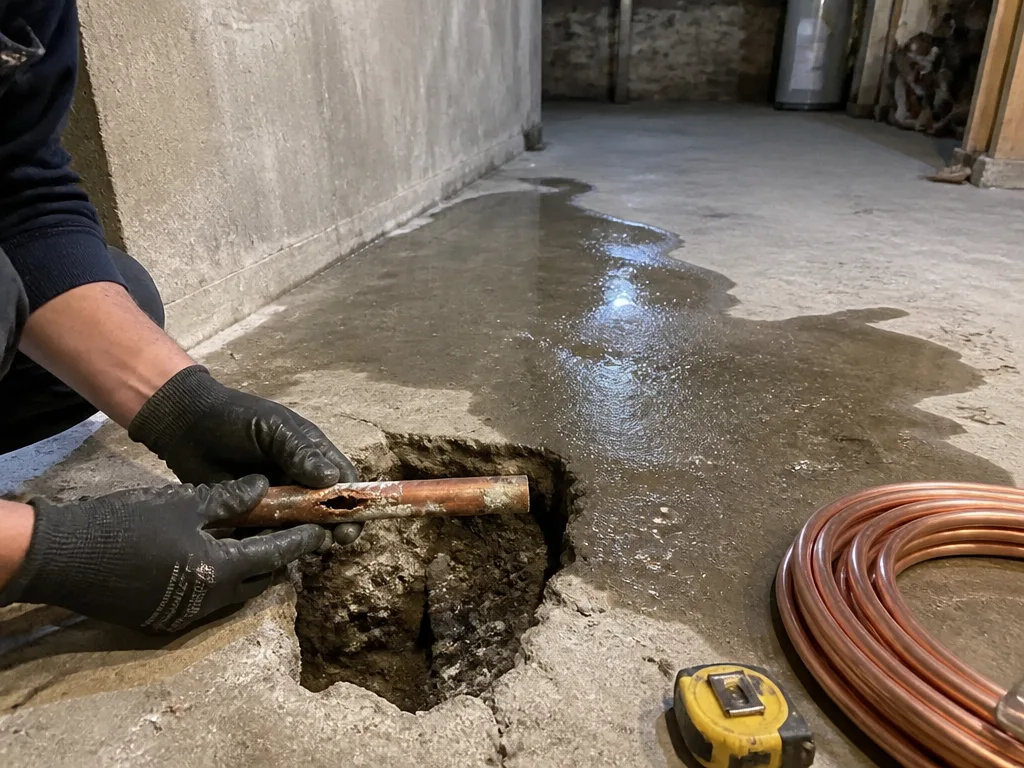
The material of the line changes the repair. Copper has been the standard for decades, and a single corroded section can often be cut out and replaced with a short run of new copper or a repair coupling. Galvanized steel is a different story. It tends to fail in more places at once, so a repair in one spot can leave you facing another leak a few months later. In those cases a full reroute of the affected run usually makes more sense, even though the price is higher upfront.
PEX has its own considerations. It resists corrosion well and bends around obstacles, which can mean fewer cuts, but the fittings and connection points still need to be done right. We look at the pipe material early because it shapes the whole plan.
How long the leak has been running
This one surprises people. A leak that has been quietly running for months does more damage than the water itself. Moisture under the slab can soften the soil beneath, weaken the concrete edges, and feed mold in the subfloor or wall cavities. Once that happens, the scope of the job grows. Drying, removing damaged material, and replacing sections of flooring or drywall all add to the total.
If you notice a warm spot on the floor, a damp smell, a water bill that jumped without explanation, or a hairline crack that wasn't there before, call sooner rather than later. Catching it early is one of the few things you can do that reliably keeps the job smaller.
Whether the water main or the drain is involved
Not every slab problem is a supply line leak. Sometimes the issue is a drain line that has cracked or separated, and that changes the approach. Drain work often requires excavation or specialized tools to reach the break, and it has to be sloped correctly to keep things flowing. If your home has had recurring backups, a drain problem and a supply problem can overlap, and sorting out which is which is part of the early diagnosis.
Permits, access, and what the city expects
Quincy has its own inspection and permitting requirements for plumbing and excavation work, and those can affect scheduling and total cost. Some jobs need inspection before the concrete goes back in. Others need coordination if the work reaches near a sidewalk, a driveway, or a shared property line in a denser neighborhood like Squantum or Atlantic. Ask whether the work you are considering needs a permit, and get a plain answer about what that means for your timeline.
What you can do to keep the job manageable
A few practical steps help. Clear a path to the area where the leak is suspected so the crew can start quickly. Note when you first noticed the problem and any changes in your water bill. Keep pets and kids away from the affected floor, and move valuable items out of the room. If you have floor plans or older paperwork on the house, have them handy, because they can show where lines were run decades ago.
Slab leaks are rarely cheap, but they are rarely hopeless either. The homeowners who end up with the smoothest jobs are usually the ones who call early, ask good questions, and let the plumber explain the plan before any concrete comes up. If you think you have a slab leak in Quincy, call Quincy Clogged Drain Repair and describe what you are seeing. We will tell you what we think is going on and what kind of work it will likely take.